History of the Castle

From a fortified castle to a Renaissance palace

The founders of Cénevières—the powerful family of the Lords of Gourdon—are said to have formed two prestigious alliances: with the Dukes of Aquitaine and the Counts of Toulouse.

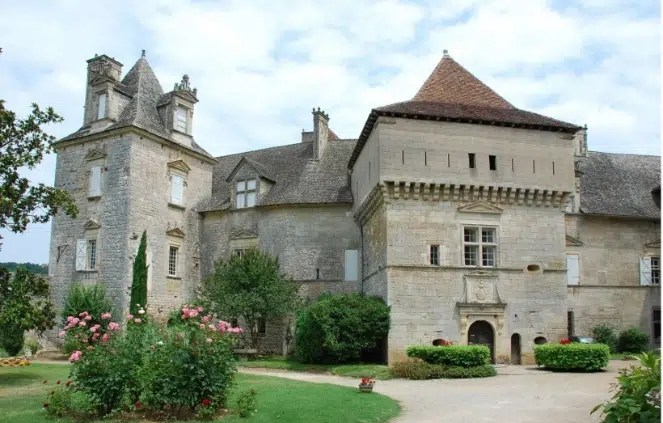
During the nine centuries of Gourdon rule, this castle underwent three distinct periods of development, eventually becoming one of the most beautiful Renaissance castles in the Lot Valley.

The Middle Ages and the Hundred Years' War

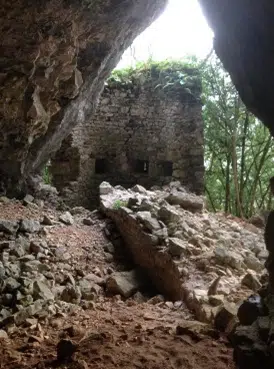
The original cave was protected by ramparts beginning in the 11th century; then, in the 13th century, a seven-story keep with dungeons was built, separate from the main residential wing, which can still be seen today.

During the Hundred Years’ War, from 1360 to 1453, the Quercy region was ravaged by conflicts between feudal lords in the absence of a central authority and, of course, by the English under the command of the famous Black Prince.

After putting up a valiant resistance, Jean de GOURDON entered the service of King Richard II of England for a time. Since his son had no children, the title of Cénevières passed to his nephew Jean III de Penne, who then took the name PENNE-GOURDON-GAIFFIER-CENEVIERES.

The Italian Wars

In 1524, Flottard de GOURDON, Lord of Cénevières, was appointed captain of 200 light cavalry: he fought in the battles of Ravennes (1512), Marignan (1515), Cérizolles (1544), and Pavia (1525), where Francis I was taken prisoner by Emperor Charles V. He fought under the command of Marshal de BRISSAC and that of his relative and friend, the famous Galiot de GENOUILLAC, Grand Master of Artillery to Francis Ier, who designed the beautiful Château d’Assier in Quercy.

In 1531, Flottard married Marguerite de CARDAILLAC, Baroness of Saint-Cirq, a highly cultured and distinguished woman who established a circle of Quercy intellectuals centered around the poets Clément MAROT, Hugues SALEL, and Olivier de MAGNY. Quercy thus made a modest contribution to the spread of humanist ideas within the circle of great writers who formed the PLEIADE.

The Renaissance and the Wars of Religion

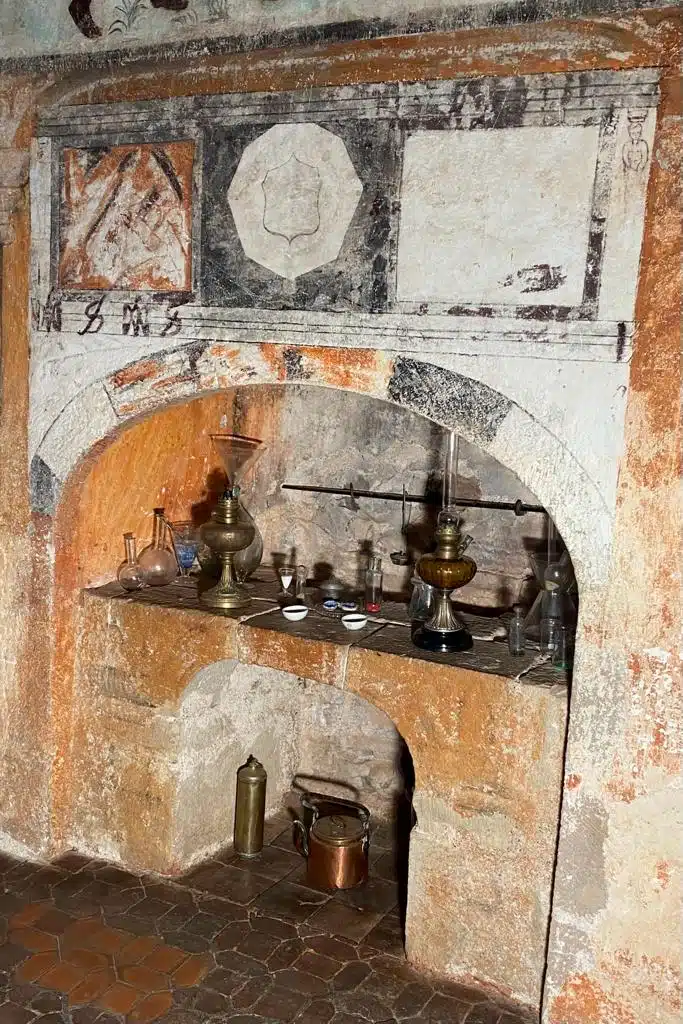
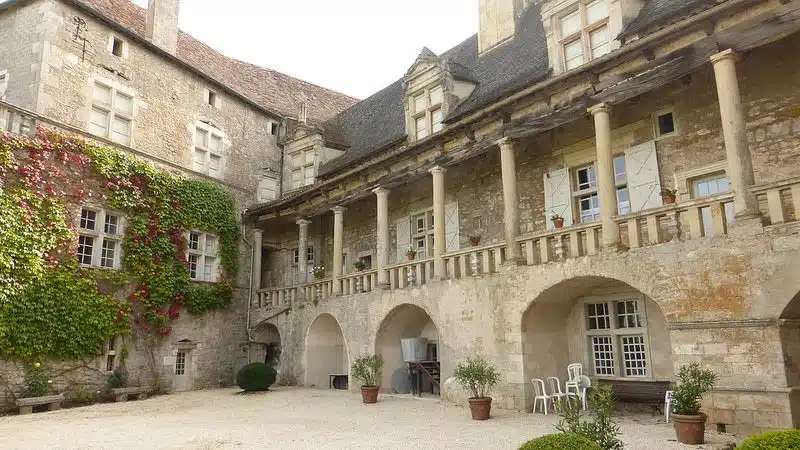
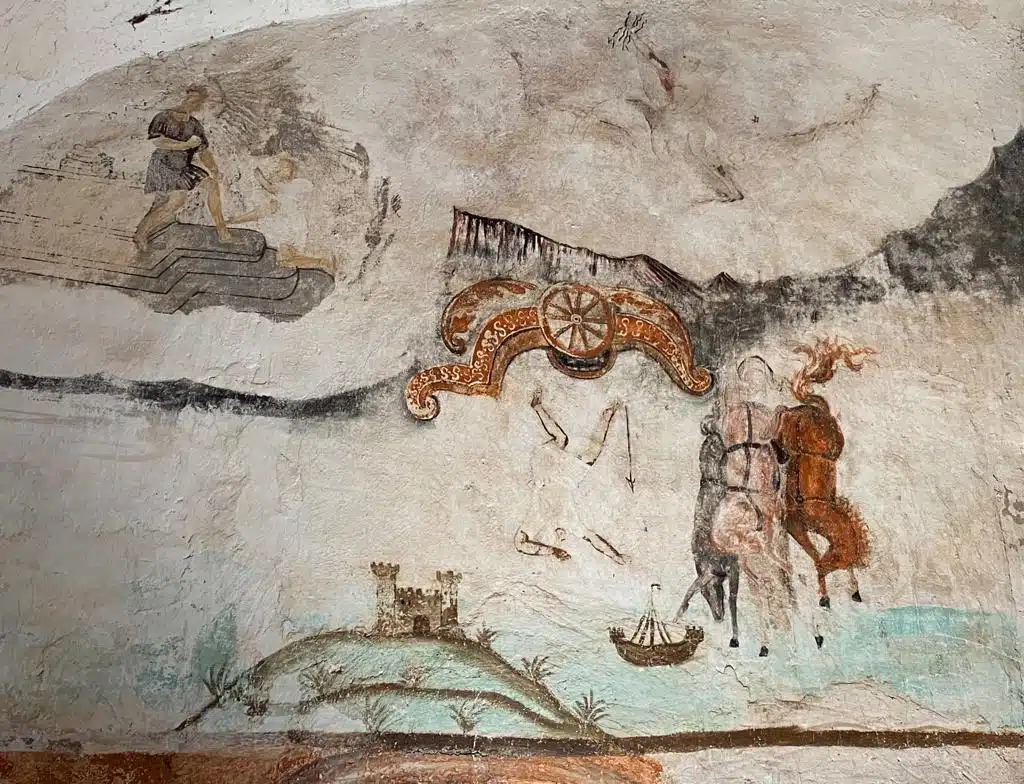
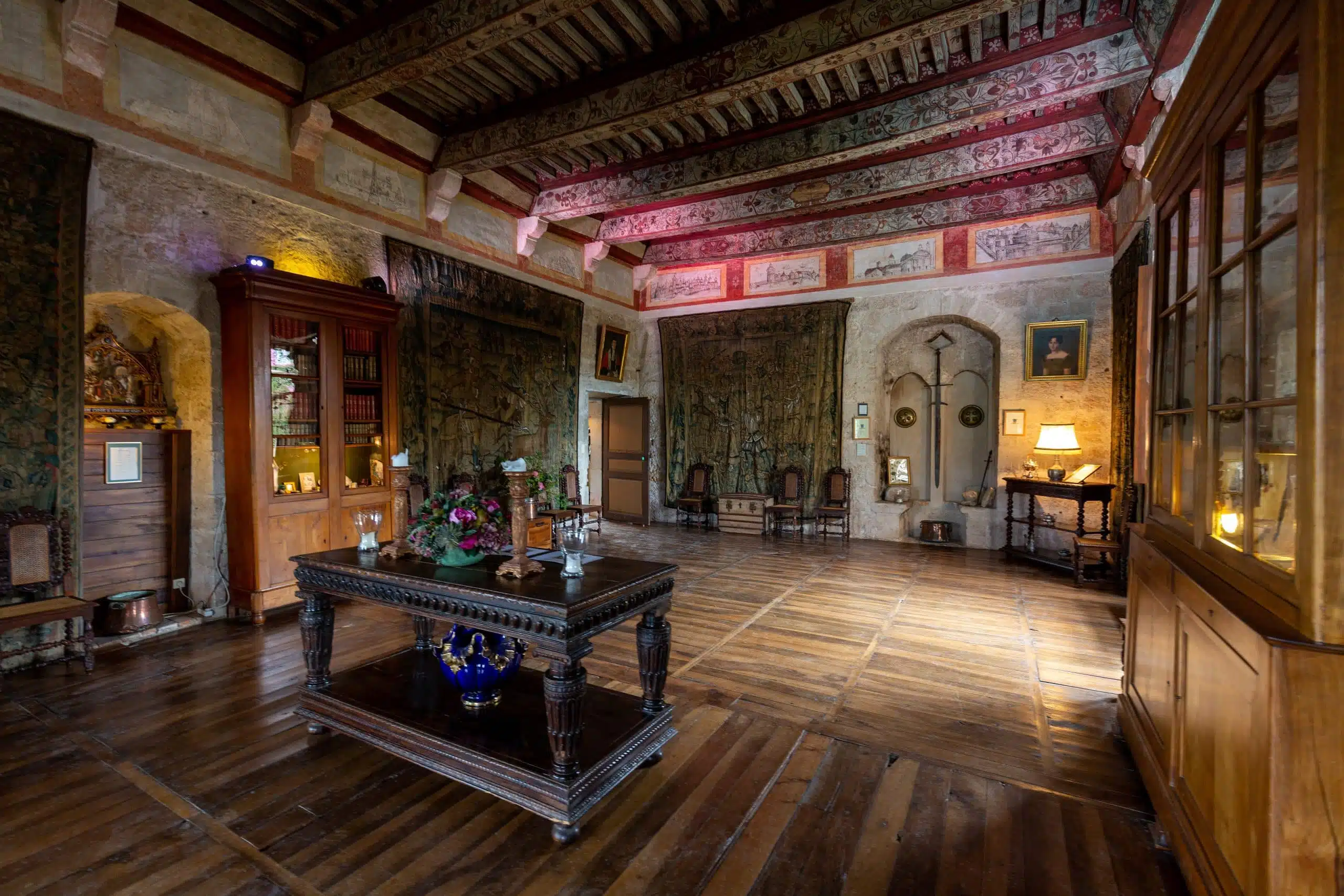
Upon their return from the Italian Wars, Flottard and his wife—and later their son Antoine, who succeeded him in 1561—completely remodeled Cénevières and transformed it into a sumptuous residence. They built the central building in the second half of the 16th century, featuring a gallery with nine Tuscan-style columns, a painted ceiling decorated with tulips, frescoes depicting various views of Constantinople (now Istanbul), an alchemy room adorned with frescoes, and large carved windows.

Antoine de Gourdon was made a Knight of the King’s Order, a Councilor of State, and Captain of 50 men-at-arms by Charles IX, and was subsequently named Marquis of Cénevières in 1612 by decree of Louis XIII.

At the urging of Jeanne d’ALBRET, the mother of HENRI IV, the GOURDON family embraced the Calvinist cause very early on and joined the HUGUENOTS alongside the CARDAILLAC family. They took part in the St. Bartholomew’s Day Massacre in 1572. The great Protestant theologian Théodore de BEZE came to Cénevières in 1563, as did Henri de Navarre, the future Henri IV, who came to prepare for his first military campaign—the capture of Cahors in 1580. Antoine de GOURDON was appointed governor there. While steadfast in his new Protestant faith (as evidenced by the chapel that still stands today within the castle grounds), he nonetheless remained loyal to the Catholic monarchy. With him, the powerful GOURDON CENEVIERES family died out, as he had no children by his three successive wives.

The La Tour du Pin Gouvernet Family

Isabeau d’ASTORG de MONTBARTIER, widow of Antoine de GOURDON, married Charles de La Tour du Pin, Marquis de Gourvernet, in 1617.

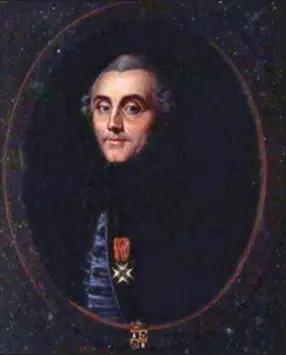
Among his descendants, Jean Frédéric de La TOUR du PIN was appointed Minister of War by Louis XVI in 1789. He was executed on the scaffold for testifying in favor of Marie-Antoinette during her trial in 1794. A few months earlier, in 1793, he had sold the château for 524,000 livres to Mr. Louis NAURISSART, director of the mint in Limoges and a deputy of the Third Estate. This was the only sale of the château since its inception.

During the Reign of Terror, residents of neighboring villages came to loot the castle, but they did not destroy it entirely thanks to the wits of the caretaker, who led the looters to the wine cellar….

The NAURISSART, LE SAGE, de COMBAREL, and de BRAQUILANGES families

Louis Naurissart died childless in 1809. The property was inherited by his wife’s nephew, Jean Mortimer LE SAGE. It was his son Charles—an engineer and mayor of Limoges (during the Second Empire)—who beautified and restored it, turning it into a farm.

After him, the Count and Countess of COMBAREL du GIBANEL inherited it and continued to maintain it.

It was their daughter, Germaine de COMBAREL, who inherited the château. Born in 1897, she had married Mr. Max de BRAQUILANGES in 1919.

A very active woman who had personally overseen the preparation and compilation of the application to have the Château de Cénevières designated a Historic Monument as early as 1942, a designation that did not take effect until December 1957.

In fact, there was a lot of work to be done on the castle buildings (roofs, door and window frames, plumbing, electrical work, wall repairs, etc.), and some of it was becoming urgent!

A member of the aristocracy born in the late 19th century, she had the foresight at the time to open the château to the public by organizing guided tours, knowing that to maintain this grand estate, she would need income in addition to her own, which would supplement government subsidies, (subsidies made possible by the castle’s designation as a historic site.)
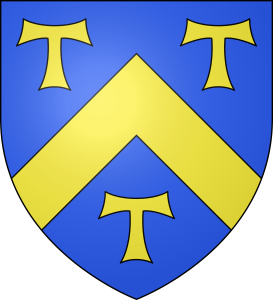
His eldest son, Guy de BRAQUILANGES, who married Marie-Josephe de Marin de Carranrais in 1947, oversaw numerous restoration projects over a period of more than sixty years, from 1960 until his death in 2021. To finance these numerous projects, he and his wife expanded the castle’s visitor services and significantly increased visitor numbers, eventually exceeding 14,000 visitors per tourist season.

Today, the heirs to this great estate are the three sons of Mr. and Mrs. Guy de Braquilanges—Patrick, Olivier, and Marc—and their respective wives, Patricia, Isabelle, and Laurence. They represent the seventh generation and have been responsible for managing and operating the château since 1995.

Together with their children and grandchildren, they continue to maintain the site, welcome visitors, and organize various events.
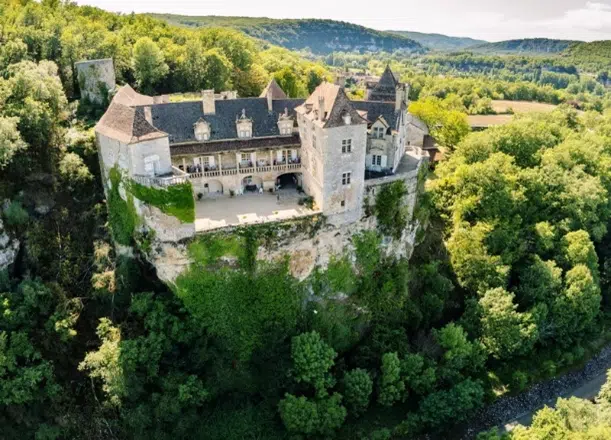
Preserving this large and wonderful family home: that is our shared goal

Architecture

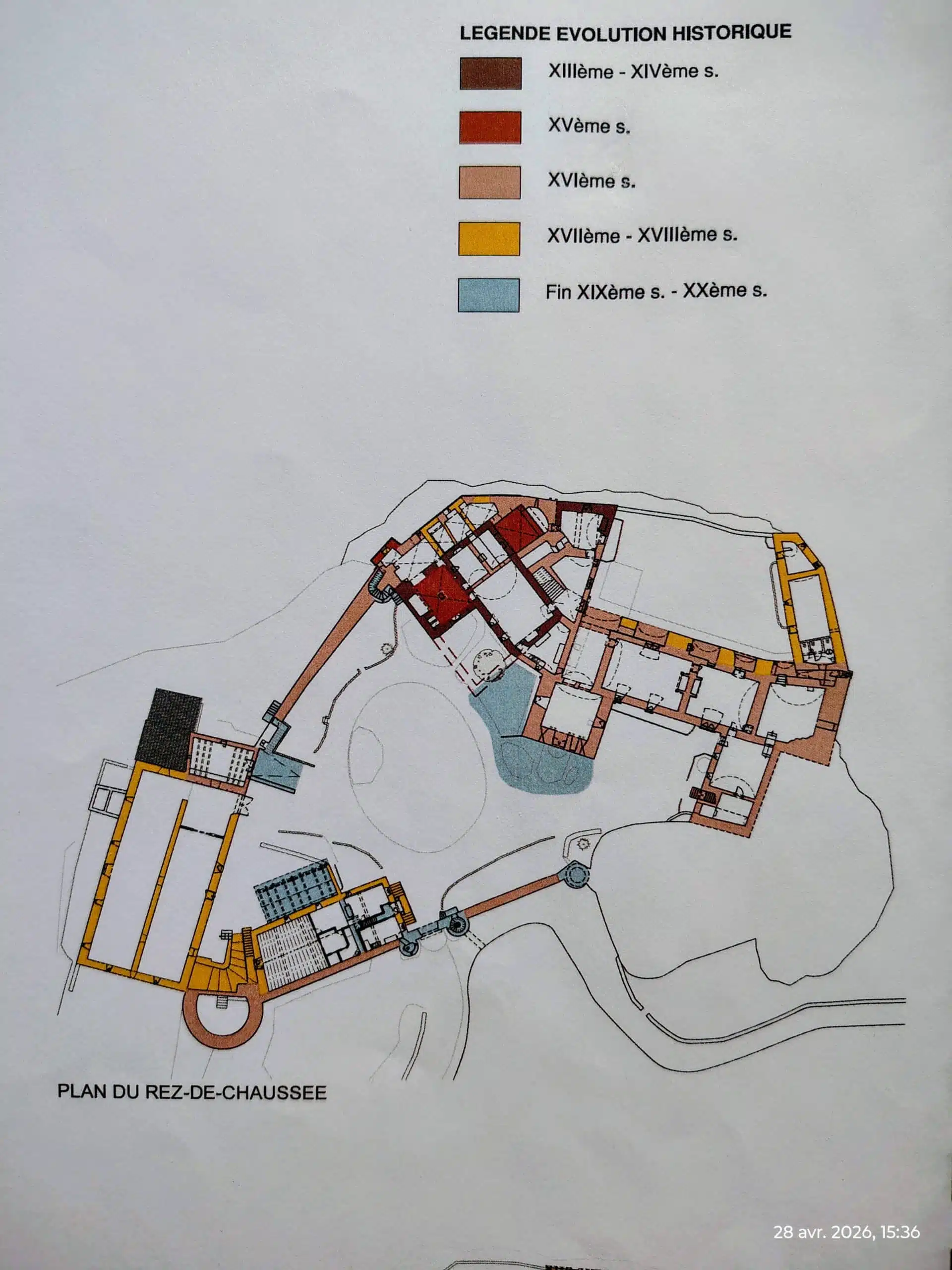
Since the 13th century, the castle has undergone numerous changes and transformations, primarily after the Renaissance. Originally a military garrison, the fortified castle was later converted into a palace.

An alchemical house from the late 16th and 17th centuries; many interior and exterior decorative elements remain:

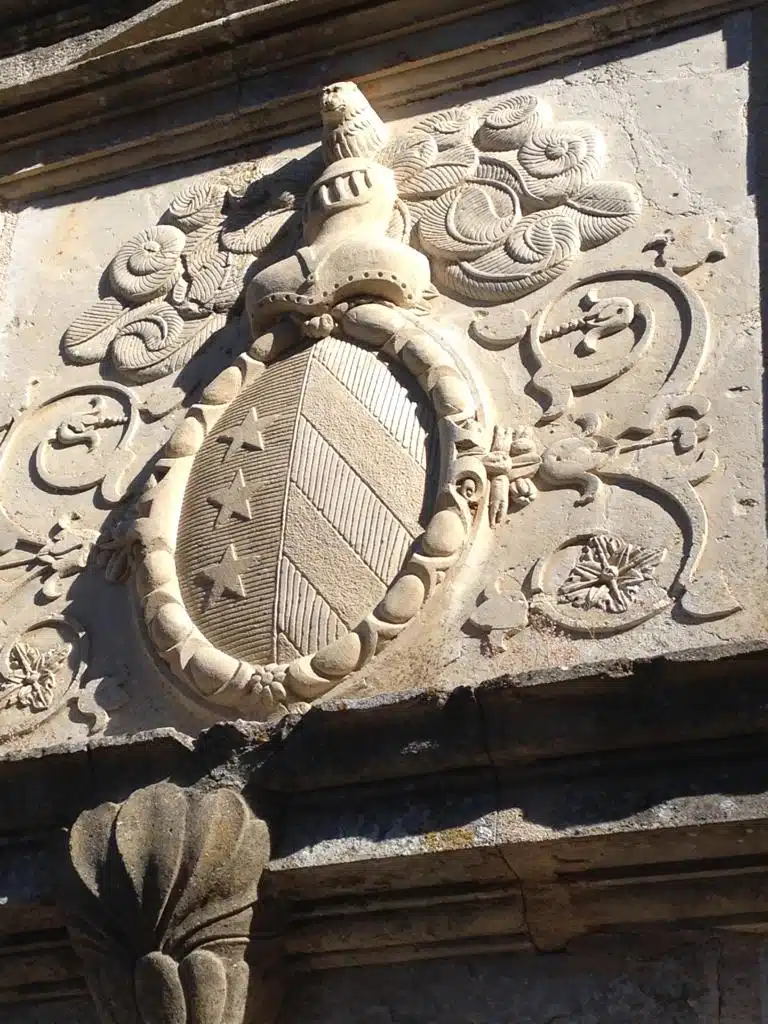
The coat of arms in the center of an egg—a symbol of the vessel (athanor) in which transmutation takes place. The egg is also a symbol of life.
These skylights can be found above many of the house’s windows. They embody the three “fires” of Philosophy:
  • Natural fire ” or the vital sulfur of matter
  • The ” unnatural fire” —a healing agent —or “secret fire”
  • Natural-shaped fire ” or common stove fire
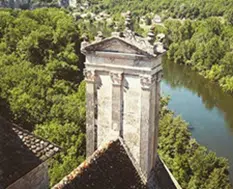
The large “Renaissance”-style chimney on the roof of the Grand Salon also brings to mind the mysterious “Athanor” that every alchemist was expected to build himself.
Another distinctive architectural feature is the Renaissance-style gallery in the Tuscan style
The Fall of Phaeton